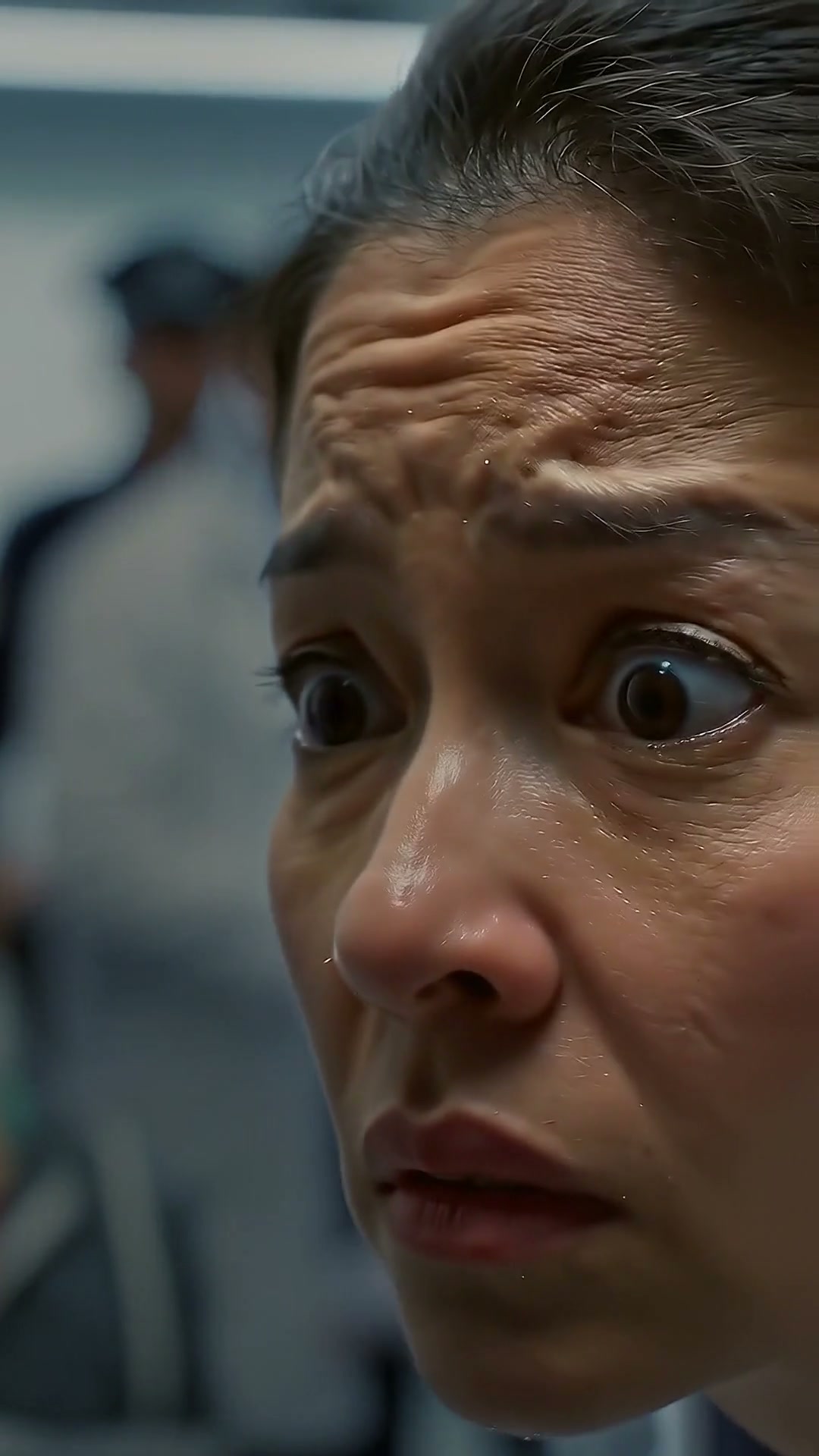
The first person to laugh when my mother-in-law suggested nobody would notice if I disappeared was my husband.
That was the detail I remembered most clearly afterward.
Not the insult itself.
Not the laughter of twenty-three people.
Not even the satisfied expression on Darlene Bell’s face.
It was Graham laughing beside me, close enough that our elbows touched.
I had spent seven years believing that his silence was an unfortunate personality trait.
He hated arguments, I told myself.
His mother was difficult.
Some families expressed affection through teasing.
But that Sunday afternoon in Richmond, Virginia, I finally understood that Graham’s silence was a choice.
And his laughter was an answer.
My name is Mara Whitcomb.
I was thirty-eight years old that summer, married to Graham Bell, and slowly disappearing inside a life I had worked desperately to hold together.
The Bell family owned a sign-making company called Bell & Son Signworks.
Officially, Graham managed the business.
Unofficially, I handled almost everything that happened between a customer placing an order and a completed sign reaching its destination.
I created estimates, tracked material costs, maintained installation calendars, updated the customer database, and corrected invoices before they became expensive problems.
I also produced original designs through my own small freelance studio, work that Graham’s company occasionally licensed or purchased.
There were contracts for some of those designs.
There were no contracts for the countless evenings I spent fixing his administrative mistakes.
Somewhere along the way, helping my husband had turned into running much of his business without being paid for my time.
And because I did that work quietly, his family decided it couldn’t be particularly valuable.
The cookout began at noon.
By eleven, I had already arranged the outdoor tables, prepared two salads, delivered a peach tart, and helped replace the propane tank because Graham had forgotten to buy another one.
Darlene spent that time directing everyone from a cushioned chair beneath her patio umbrella.
“More ice, Mara.”
“Those plates should go on the other table.”
“Don’t forget Kelsey doesn’t like onions.”
I followed the instructions automatically.
My mother-in-law had a remarkable talent for making demands sound like opportunities to demonstrate love.
When guests complimented the food, she smiled and accepted the praise.
At three seventeen, she decided to entertain everyone at my expense.
“Tell me something, Mara,” she announced, holding her lemonade as though she were making a wedding toast.
“If you walked out of this family tomorrow, do you honestly think anyone would notice?”
Kelsey laughed immediately.
Uncle Russell slapped his knee.
Someone muttered that the dishes would certainly pile up.
Then Graham chuckled.
He didn’t laugh loudly.
That almost made it worse.
His little nervous laugh was familiar.
I had heard it when his mother criticized my clothes, questioned my intelligence, and suggested that my late mother’s artwork was nothing more than sentimental clutter.
Every time, Graham chose the easier audience.
I looked around the backyard.
One person wasn’t laughing.
Kelsey’s seventeen-year-old daughter, Mae, stared down at her plate.
She looked uncomfortable but said nothing.
I understood that feeling better than she could have imagined.
Darlene leaned forward, waiting for me to react.
I lifted my fork and took one bite of peach tart.
Then I answered with three words.
“Let’s find out.”
Darlene laughed again.
“Oh, don’t be