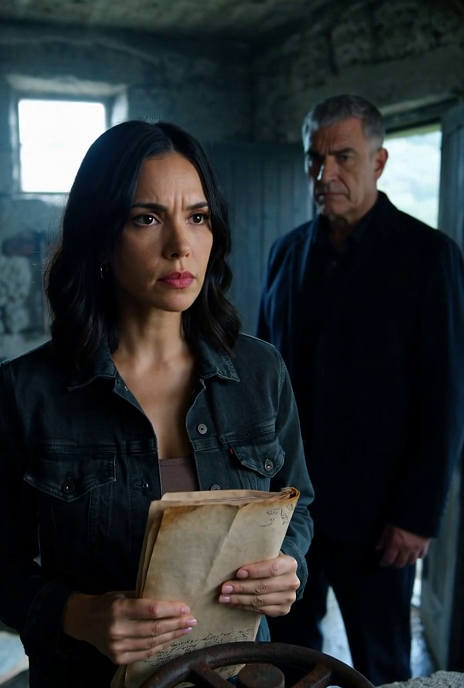
My younger brother threw my visitor badge into a puddle and laughed because he thought I had never done anything worth respecting.
Then he asked whether I had a call sign.
I answered with two words.
“Fury Ten.”
The gunnery sergeant standing behind him went completely still.
He had been holding a folder of Family Day schedules, but his grip suddenly tightened until the corners of the pages bent.
“Say that again, ma’am,” he said.
My brother Owen grinned.
“Come on, Gunny.
Don’t encourage her.
She probably invented it on the drive here.”
But Gunnery Sergeant Luis Navarro wasn’t smiling.
He looked at me as though he had just recognized a voice from a very old nightmare.
“Fury Ten,” I repeated.
His eyes widened.
“September 2018? North Carolina?”
I nodded once.
He took a step closer.
“Were you the medic who stayed behind?”
And suddenly, eight years of silence were about to end in front of everyone.
My name is Mara Vale.
I’m thirty-three years old, and I’ve spent most of my adult life working in emergency medical aviation.
I am not a Marine.
I’ve never claimed to be one.
I am a civilian flight paramedic, trained to work aboard rescue aircraft during situations where ordinary ambulances cannot reach the people who need them.
I’ve flown through heavy rain, helped evacuate patients from isolated communities, and spent nights in emergency operations centers trying to find transportation for people nobody else could reach.
But I don’t tell those stories at family gatherings.
Partly because some memories don’t improve when repeated.
Mostly because my family stopped asking what I did a long time ago.
My younger brother, Corporal Owen Vale, was twenty-seven and had served in the Marine Corps for several years.
He loved being a Marine.
I understood that.
His discipline had helped him grow from an uncertain teenager into a capable young man.
I was proud of the person he could be.
Unfortunately, the person he became around me was someone very different.
Owen had spent years believing I walked away from our family when our father was dying.
He spoke about it so often that the story had become part of his identity.
He was the loyal son.
I was the daughter who disappeared.
He was the one who stayed.
I was the one who chose strangers.
Whenever relatives praised him, he found a way to remind them that some people understood responsibility better than others.
I had stopped defending myself because every conversation became an argument about a night none of us wanted to remember honestly.
Our mother, Diane, never corrected him.
Her silence hurt worse than his insults.
When she called me about Family Day at Camp Lejeune, I nearly declined.
“Please come,” she said.
“I know things have been difficult, but he’s your brother.”
“Does Owen actually want me there?”
There was a pause.
“He wants the family together.”
That wasn’t an answer, and we both knew it.
Still, I agreed.
I wanted to see him in a place where he was happy.
I wanted to believe there might still be something between us that grief hadn’t destroyed.
On Saturday morning, I drove through the base’s visitor procedures and parked near the designated Family Day area.
The North Carolina air was warm and humid.
Aircraft stood