follow.
“You have to count to ten,” she told me.
“I will.”
The final group was transferred after daylight, once responders had secured another route through the flooded streets.
I left the clinic soaked, exhausted, and carrying almost nothing except my medical bag and a radio with a failing battery.
We had gotten all nineteen people out alive.
It should have been the happiest morning of my life.
Instead, when I finally reached a working phone, a hospital employee told me my father had died during the night.
I remember lowering myself onto the floor beside the emergency operations desk.
I remember staring at the muddy water dripping from my sleeves.
I remember thinking that I had promised him I would come back.
And I hadn’t.
At his funeral, Owen wouldn’t stand beside me.
He said I had chosen strangers over our father.
Our mother stood between us, visibly grieving, but she said nothing to correct him.
I tried to explain that I had been trapped by the storm, that I had been helping people whose lives were in danger, and that Dad himself had told me to go.
Owen refused to listen.
Eventually, I stopped trying.
I returned to aviation medicine, accepted difficult assignments, and built a life around a profession that was easier to understand than my family.
Years passed.
Then, on a sunny Saturday at Camp Lejeune, the past caught up with me.
Navarro was still talking when I returned my attention to the present.
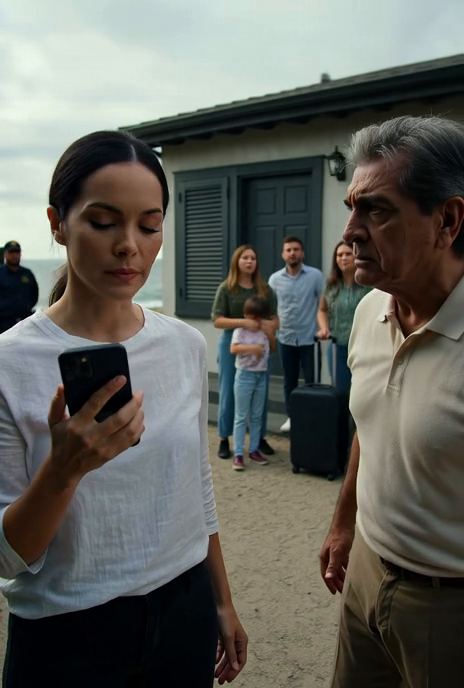
“Your sister did not abandon those people,” he told Owen.
“She stayed with us until every patient had a way out.”
Owen’s expression hardened.
“I’m glad your daughter survived, Gunny.
I mean that.
But my dad died that night.
And my sister wasn’t there.”
The words created a terrible silence.
Navarro looked at me rather than arguing.
He understood that there were two different stories being told, and that saving his daughter didn’t erase my brother’s loss.
“You’re right about one thing,” I told Owen.
“I wasn’t there when Dad died.
I’ll regret that for the rest of my life.”
For a moment, Owen seemed almost satisfied.
Then I continued.
“But you have spent eight years saying I didn’t care.
You have no idea how much I wanted to be there.”
“You left anyway.”
“Yes,” I answered.
“And Mom was there when I made that decision.”
Our mother lowered her gaze.
Owen turned toward her.
“Mom?”
She didn’t answer.
I stepped closer.
“Tell him what happened that morning.”
Her hands tightened around her handbag.
“Mara, please.
Not here.”
“You let him humiliate me here.
You let him do it at birthdays, dinners, and every holiday we’ve survived since Dad died.”
My voice remained quiet, but I could feel it trembling.
“You don’t have to tell everyone.
But you need to tell Owen.”
Navarro immediately signaled another Marine to take over the nearby demonstration area.
Then he suggested that we move into a shaded family briefing room, away from the gathering crowd.
Before we left, he addressed my brother.
“Corporal Vale, we’ll discuss your treatment of a visitor with your leadership after Family Day.
You do not get to use your uniform or this event as an excuse to demean someone.”
Owen lowered his eyes.
“Understood, Gunny.”
It was the first respectful thing