of her work was classified, and the details she could share never seemed to satisfy her mother’s expectations.
Derek, meanwhile, had always been the family’s celebrated child.
He was outgoing, ambitious, and comfortable in public.
When he decided to pursue a military career, Evelyn embraced the idea enthusiastically.
She attended his training events, shared photographs of his achievements, and proudly told everyone that her son had the temperament to become a soldier.
Nora never resented Derek for succeeding.
What hurt was the assumption that his success mattered more simply because it was easier to understand.
She remembered helping him finish a school science project late at night.
She remembered encouraging him after his first difficult training evaluation.
She remembered the long conversations in which she explained that leadership was not about looking powerful but about being accountable for the lives placed in one’s hands.
She had given him those lessons without expecting anything in return.
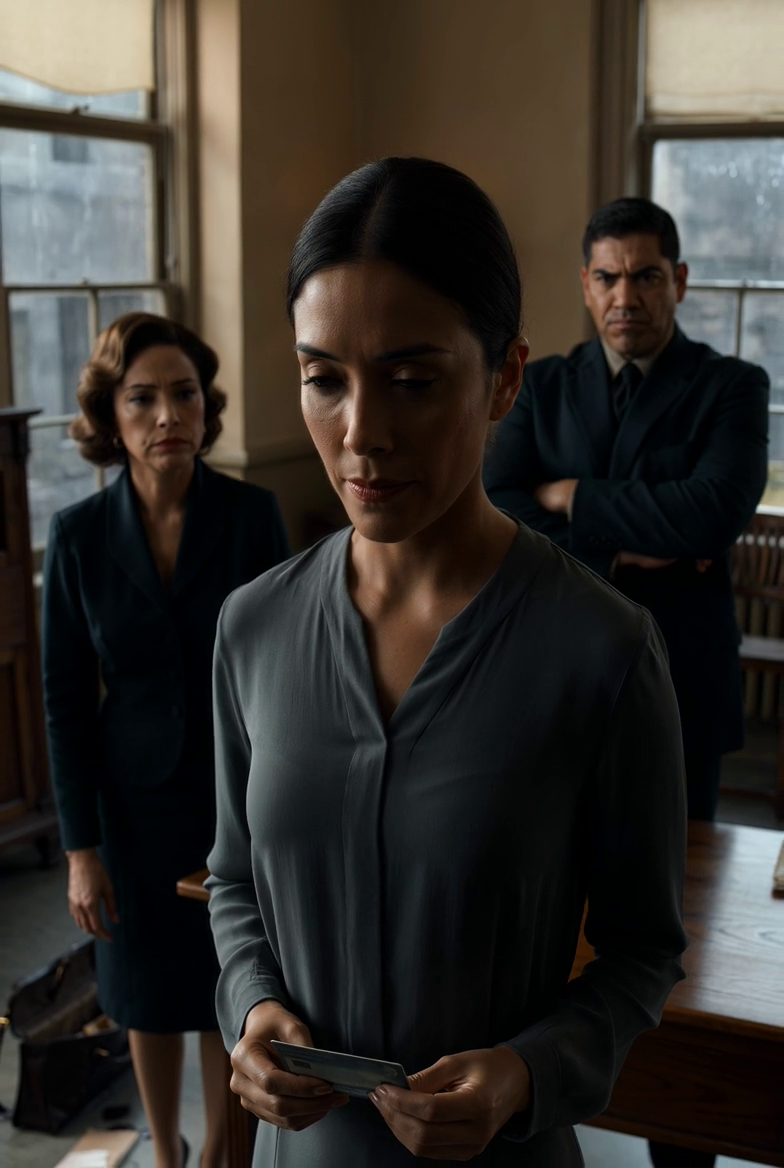
Now, watching him salute her, Nora wondered whether he was finally seeing the person who had been standing beside him all along.
THE GENERAL’S REVELATION
The general turned toward the gathering and asked for everyone’s attention.
“I understand we’re here to celebrate Captain Derek Hayes’s promotion,” he began.
“He has earned this achievement, and I congratulate him.
But I would be doing a disservice to this family if I allowed an important truth to remain unspoken.”
He gestured toward Nora.
“Colonel Hayes has served in demanding operational assignments, led personnel in combat, and helped coordinate emergency responses under extraordinary pressure.
Her record reflects years of disciplined service and difficult decisions.”
Evelyn shook her head in disbelief.
“But she never told us she commanded anyone.”
“Some of her assignments were classified,” the general explained.
“And she has never sought attention for her work.”
Then Derek asked a question that changed the atmosphere again.
“General, was Nora involved in Operation Lantern?”
The general paused before answering.
“Yes.
She led the command team responsible for coordinating an emergency extraction after communications failed.
Forty-three soldiers were trapped, and the original rescue plan had become impossible.
Colonel Hayes identified an alternative route, redirected available support, and maintained coordination until the last personnel reached safety.”
Derek looked stunned.
“My platoon sergeant told me about that operation,” he said.
“He said the rescue commander stayed on the radio all night.
He said the soldiers believed they were going to be left behind until that voice told them help was coming.”
“That was your sister,” the general replied.
The room remained silent.
For Nora, the memory of Operation Lantern was not a story of glory.
It was a night of interrupted communications, exhausted personnel, uncertain conditions, and the terrible responsibility of making decisions without knowing whether every person under her command would survive.
She remembered the relief of hearing confirmation that the last group had reached safety.
She remembered the names of the people who returned home and the faces of those who had not been so fortunate in other operations.
She had never described the experience as heroic.
She had simply done the job in front of her.
Derek’s voice dropped to a whisper.
“You saved them.”
“We worked as a team,” Nora answered.
“No one does that kind of work alone.”
THE ENVELOPE
The general removed a sealed envelope from his