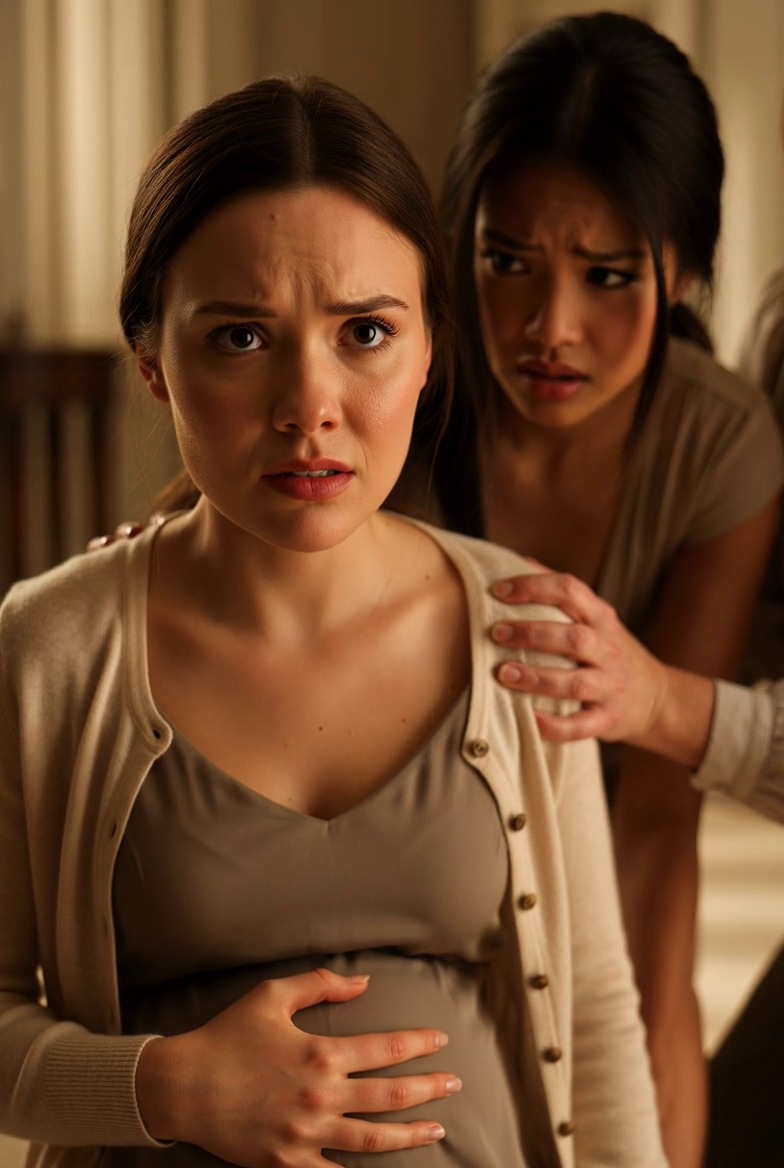
for the paramedics.
My mother continued complaining that I was overreacting.
When the paramedics arrived, they assessed Clara and prepared to take her to the hospital.
I stayed close to her, terrified by how weak she looked.
Our son was finally quiet against my chest, but every time he moved, I remembered the sound of his earlier cries.
At the hospital, doctors began treating Clara and monitoring her condition.
They explained that she was seriously unwell and needed immediate care.
I sat beside her bed, replaying the afternoon in my mind, wondering how long she had been suffering while I was away.
When she finally opened her eyes, I took her hand.
“I’m here.
You’re safe.”
Her first question was, “Is your mother angry with me?”
I could barely breathe.
My wife had collapsed while caring for our newborn, and she was worried about upsetting the person who had mistreated her.
“Clara, you have done nothing wrong,” I told her.
“You don’t have to earn the right to rest.”
Then she told me what had been happening behind my back.
My mother criticized the way she folded laundry, organized bottles, cleaned the house, and cared for the baby.
Whenever Clara sat down, my mother called her lazy.
Whenever she admitted she felt weak, my mother accused her of exaggerating.
That morning, Clara had begged to rest instead of cooking dinner.
My mother insisted that I worked hard and deserved a proper meal.
Afraid of provoking another confrontation, Clara dragged herself into the kitchen.
She barely remembered sitting on the sofa afterward.
“I heard the baby crying,” she whispered.
“I wanted to reach him, but I couldn’t move.
I’m sorry the house was messy.”
I held her hand and felt tears burn behind my eyes.
“Never apologize for being unwell,” I said.
“I should have listened sooner.”
For the first time, I understood the full cost of my habit of keeping the peace.
Every time I excused my mother’s behavior, Clara was left to endure it alone.
I stepped into the hospital hallway and called my mother.
She answered angrily, demanding to know when I would bring her grandson home.
“Pack your things,” I told her.
“You’re leaving our house.”
She laughed.
Then she accused me of betraying the woman who had raised me.
“Being my mother doesn’t give you ownership of my wife, my child, or my home,” I replied.
“You knew Clara was unwell.
You watched her collapse, and you did nothing.
You will not be alone with our son, and you will not treat my wife that way again.”
Her voice rose.
She reminded me of everything she had sacrificed for me, hoping guilt would force me to surrender.
For years, it would have worked.
This time, I said, “I’m choosing my family.”
Then I ended the call.
My hands trembled, but I didn’t take back a single word.
I called my older sister, Rachel, and explained what had happened.
She had moved out years earlier after enduring our mother’s controlling behavior herself.
When I asked her to help our mother collect her belongings, Rachel paused before answering.
“I always wondered how long it would take you to see it,” she said.
“I’ll help.”
Her words hurt because they were true.
The next morning, I returned home while