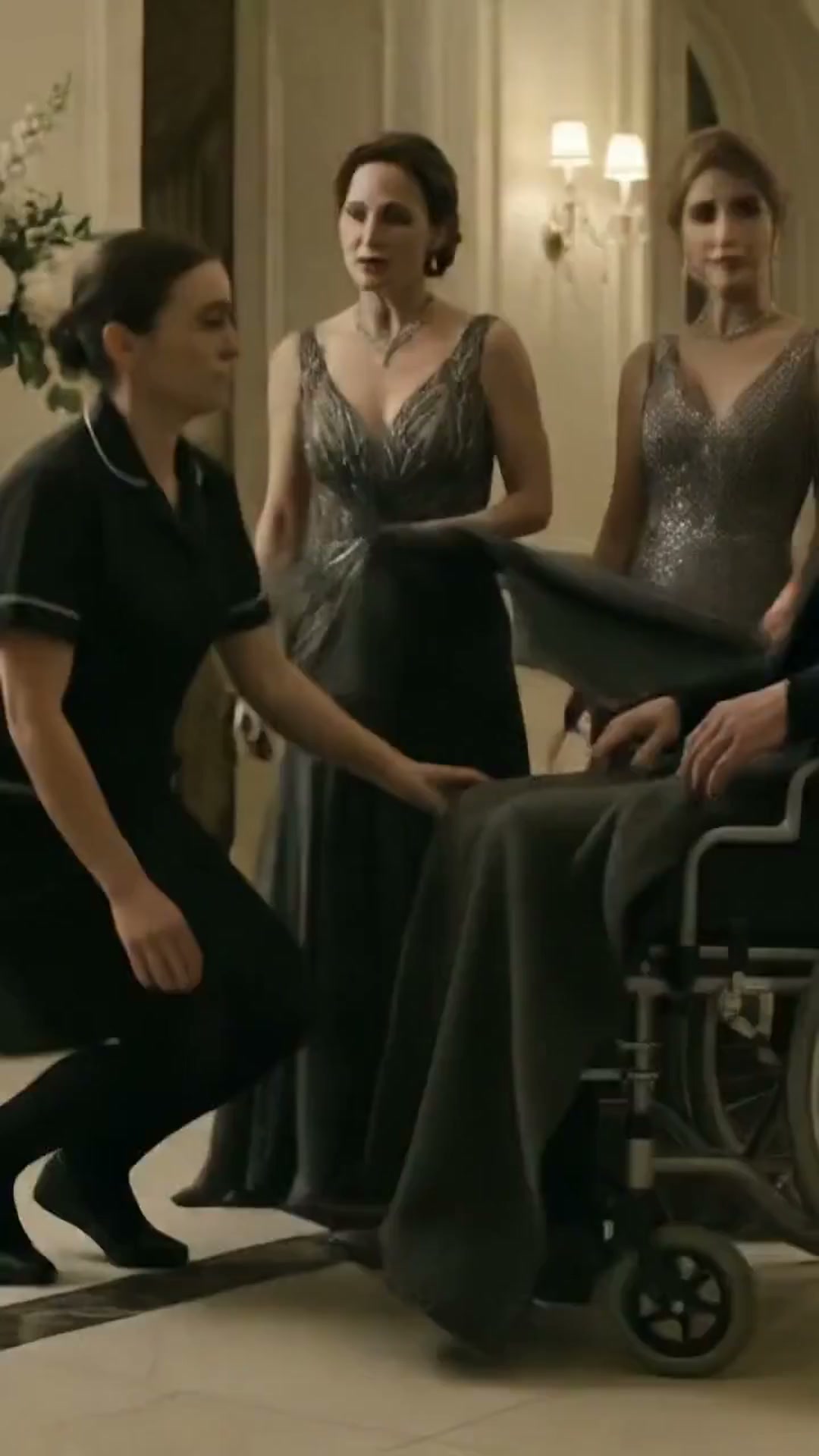
against her palm.
Judith went still.
“Again, sweetheart.”
I moved it again.
Dr.
Malik came closer and began checking my responsiveness.
Judith looked at my parents.
“She’s responding.”
My mother’s face changed.
The contempt disappeared first.
Then the certainty.
Then even the color.
She stepped backward until her shoulders touched the wall.
“Lena?” she whispered.
It was the first time she’d said my name that day without sounding disappointed.
I wanted to tell her that I had heard everything.
But I couldn’t speak yet.
My father was still standing beside the door when security arrived.
As he left, he looked once toward my bed.
I had expected hatred.
What I saw was fear.
And it was the first honest expression he’d shown me in years.
Twenty minutes later, Judith leaned close to my ear.
“Penny Eames contacted me.
She has the second ledger.”
Penny had been my family’s bookkeeper for nearly fourteen years.
She was a careful, quiet woman who remembered every invoice and never raised her voice.
Six weeks earlier, she had resigned abruptly from the Marlowe Hope Fund.
I’d assumed she’d retired.
She hadn’t.
She had discovered payments to Aster Medical Navigation and started asking questions.
When my father ordered her to change the classification of several transfers, she refused.
She had kept legally obtained copies of records she believed showed fraud and later delivered them to Judith.
The ledger included payments from eleven families, vendor transfers, and signatures supposedly approving releases from the charitable trust.
One of those signatures was mine.
It was forged.
But something else was worse.
The account receiving the largest transfer belonged to Adrian.
My brother.
I had spent years imagining that Adrian was merely spoiled and weak, trapped beneath our parents’ expectations.
The ledger suggested he might have participated in something far more deliberate.
I couldn’t ask questions until the breathing tube was removed the following afternoon.
When I finally spoke, my voice was barely audible.
“Did Adrian know?”
Judith sat beside me.
“We don’t have the full answer yet.”
“Don’t protect me from it.”
She nodded.
“I won’t.”
The police investigation began with interviews, preservation requests, and a detailed examination of the evidence.
A forensic laboratory later confirmed that the retained tea contained dangerous medications I had not been prescribed.
Hospital samples were consistent with that exposure.
The doorbell footage established that my mother had brought the tea.
The laboratory findings established what had been in it.
But investigators still needed evidence connecting her intentions to the substance and establishing my father’s involvement.
They found part of that evidence in communications obtained through legal process.
Three days before my hospitalization, my father had messaged my mother about the trust documents.
He wanted everything ready before the following week.
My mother had replied that she could make me stay home Thursday evening.
A second exchange concerned Adrian.
My father wrote that our son would be taken care of, provided Lena stopped interfering.
It wasn’t a complete confession.
But the timeline was becoming unmistakable.
And then a search uncovered the original forged medical certificate among my father’s business records, along with communications about the proposed trustee substitution.
There were also drafts of donation documents bearing my name, prepared without my consent.
Investigators found no evidence that the hospital’s legitimate transplant team had approved