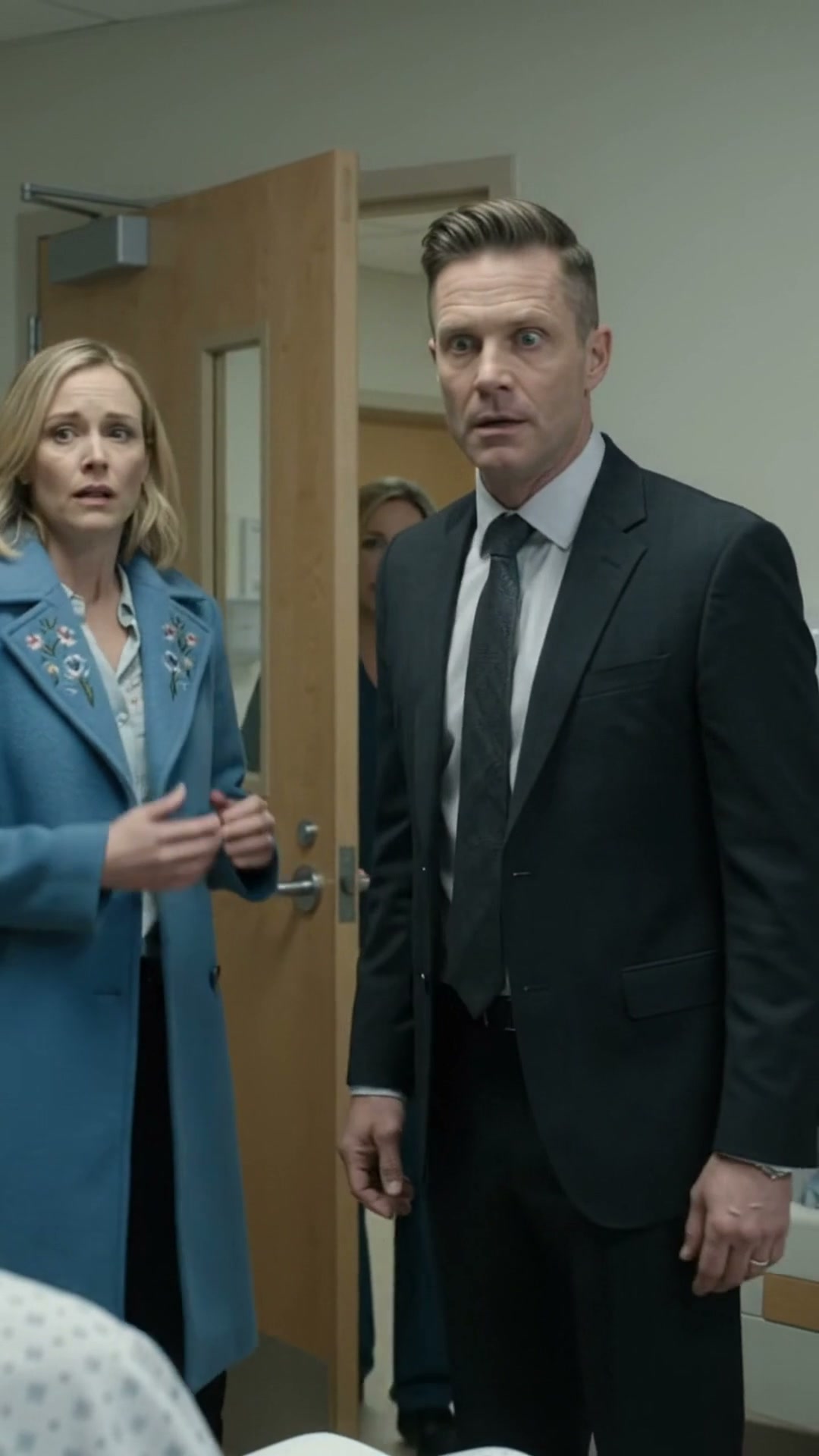
My sister called me “just a nurse” in front of 120 wedding guests, and the groom’s father was the only person who didn’t laugh.
Twenty minutes later, he stood up from the head table, asked whether I had worked a particular night shift three years earlier, and reached inside his jacket for an envelope.
By the time he finished speaking, my sister’s new husband was questioning their marriage, my father couldn’t look me in the eye, and I finally understood why a letter I’d been waiting for had never arrived.
But the story actually began long before that wedding.
My name is Jenna Bennett.
I was twenty-nine years old, and I worked as an emergency trauma nurse at St.
Catherine’s Medical Center in Chicago.
I had spent seven years learning how to remain useful when everything around me was falling apart.
Car accidents.
Heart attacks.
Frightened children.
Elderly patients with nobody waiting for them.
Families begging for answers that doctors and nurses couldn’t always give.
Some nights, I came home with aching feet and barely enough energy to make a sandwich.
Other nights, I sat in my car for twenty minutes before going inside because I needed the silence.
I loved my work anyway.
My mother had been a nurse too.
She died when I was seventeen, after a long illness that taught me more about hospitals than any teenager should have known.
Before she passed away, she held my hand and said something I carried into every difficult room afterward.
“Jenna, people will decide what you’re worth if you let them.
Don’t hand them that job.”
For years, I thought I understood what she meant.
Then my father remarried.
My stepmother, Diane, brought her daughter Felicity into our family.
Felicity was eighteen months older than me, beautiful, confident, and exceptionally skilled at making small insults sound like affectionate jokes.
If I bought a dress, she asked whether the store had been having a clearance sale.
If I earned a scholarship, she wondered aloud whether nursing programs were easier to enter than other professional schools.
If I worked through a holiday, she told relatives I preferred the hospital because I wasn’t comfortable in social situations.
My father almost never challenged her.
He was pleased to have a beautiful new wife and an impressive new stepdaughter.
Eventually, it became easier for him to accept their version of me than to ask whether it was true.
At family dinners, Felicity talked about luxury properties, wealthy clients, and the commissions she expected to earn.
I talked about patients only when someone asked.
Usually, nobody did.
Once, after I’d worked through a seventy-hour week during a staffing emergency, Dad said, “You know, Jenna, you could have made more of yourself if you’d aimed higher.”
I stared at him across the dinner table.
“Higher than what?”
“You know what I mean.
Something with advancement.
Management.
Real responsibility.”
I wanted to describe what real responsibility felt like when someone’s breathing changed in front of you and there were seconds to act.
Instead, I asked him to pass the potatoes.
I had learned that explaining my work to people determined to belittle it usually left me more exhausted than the work itself.
Then Felicity got engaged.
Her fiancé, Nathan Montgomery, was thirty-two, thoughtful, successful, and remarkably different