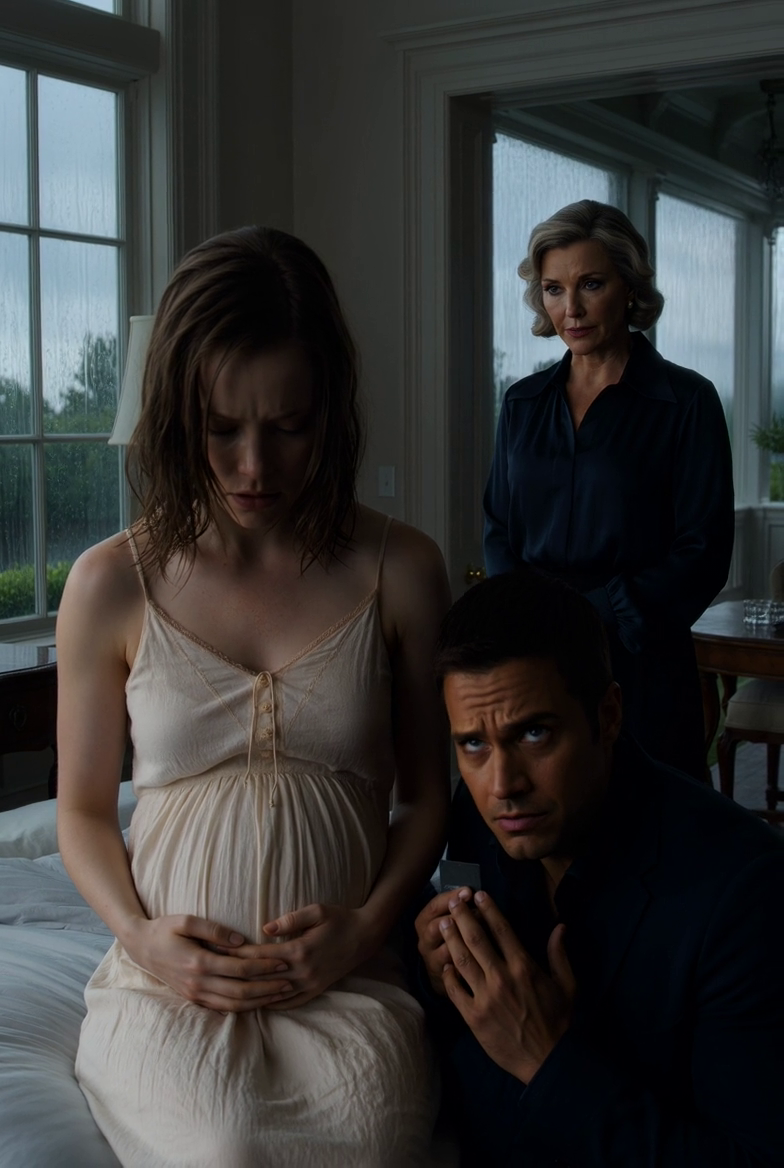
that doctors had discovered something extraordinary.
Three heartbeats.
Three babies.
The certified-mail receipt came back signed, but Julian never answered.
Later, when I was recovering from an emergency delivery, I sent another letter with photographs and the boys’ names.
Again, nothing.
Eventually, Evelyn’s attorney sent a warning about respecting the family’s privacy.
It did not directly mention the children, but I understood the threat behind it.
I moved farther away, kept copies of every document, and focused on raising my sons.
I told myself that if Julian had chosen not to know them, I couldn’t force him to love them.
I would later regret allowing that assumption to remain unchallenged for so long.
But at the time, I was exhausted, frightened, and determined to keep my babies safe.
Milo, Theo, and Kit were born on November nineteenth, six weeks before their due date.
They spent seventeen days in neonatal care.
Milo arrived first, red-faced and furious at the world.
Theo followed with one hand curled against his cheek.
Kit was the smallest and needed breathing support for his first two days.
I remember standing outside the nursery window at two in the morning, looking at three little blankets and wondering whether I would ever feel strong enough to be their mother.
Then Milo opened his eyes.
They were silver-gray.
Julian’s eyes.
By the time the boys were five, the resemblance had become impossible to ignore.
They had the same dark hair, long eyelashes, serious brows, and square chins as their father.
Their personalities, however, were entirely their own.
Milo asked questions until grown adults surrendered.
Theo studied everything before speaking.
Kit loved building miniature boats from scraps of cardboard and insisted that every vessel needed a captain.
I built my own business while they were small, beginning with logistics software for independent freight companies.
I worked from a kitchen table covered in crayons, invoices, and half-finished cups of coffee.
The first year was brutal.
By the third, my company had contracts in four states.
By the fifth, I had sold a minority stake to an investment group and moved us into a comfortable house with a garden and an actual office door that closed.
I wasn’t a billionaire.
But I had money I’d earned, work I cared about, and three children who considered our house the center of the universe.
The Ashfords had become a distant, painful chapter.
Then the wedding invitation arrived.
Julian was marrying Sloane Merritt, daughter of a well-known investment family.
Their wedding would take place on the Ashford estate outside Philadelphia, in an enormous glass conservatory that had once served as Evelyn’s private orchid house.
The society pages described the marriage as a union of two prominent business families.
I recognized the financial implications immediately.
Sloane’s family had invested heavily in infrastructure and transportation.
The Ashford shipping company had been struggling with debt and declining contracts.
This marriage promised more than social prestige.
It could become the beginning of a merger.
Evelyn’s invitation was designed to remind me that I had been discarded before the family’s most important alliance.
For several days, I considered throwing it away.
Then I found the small wooden box I kept at the back of my closet.
Inside were the boys’ first hospital bracelets, the ultrasound showing three heartbeats, copies of