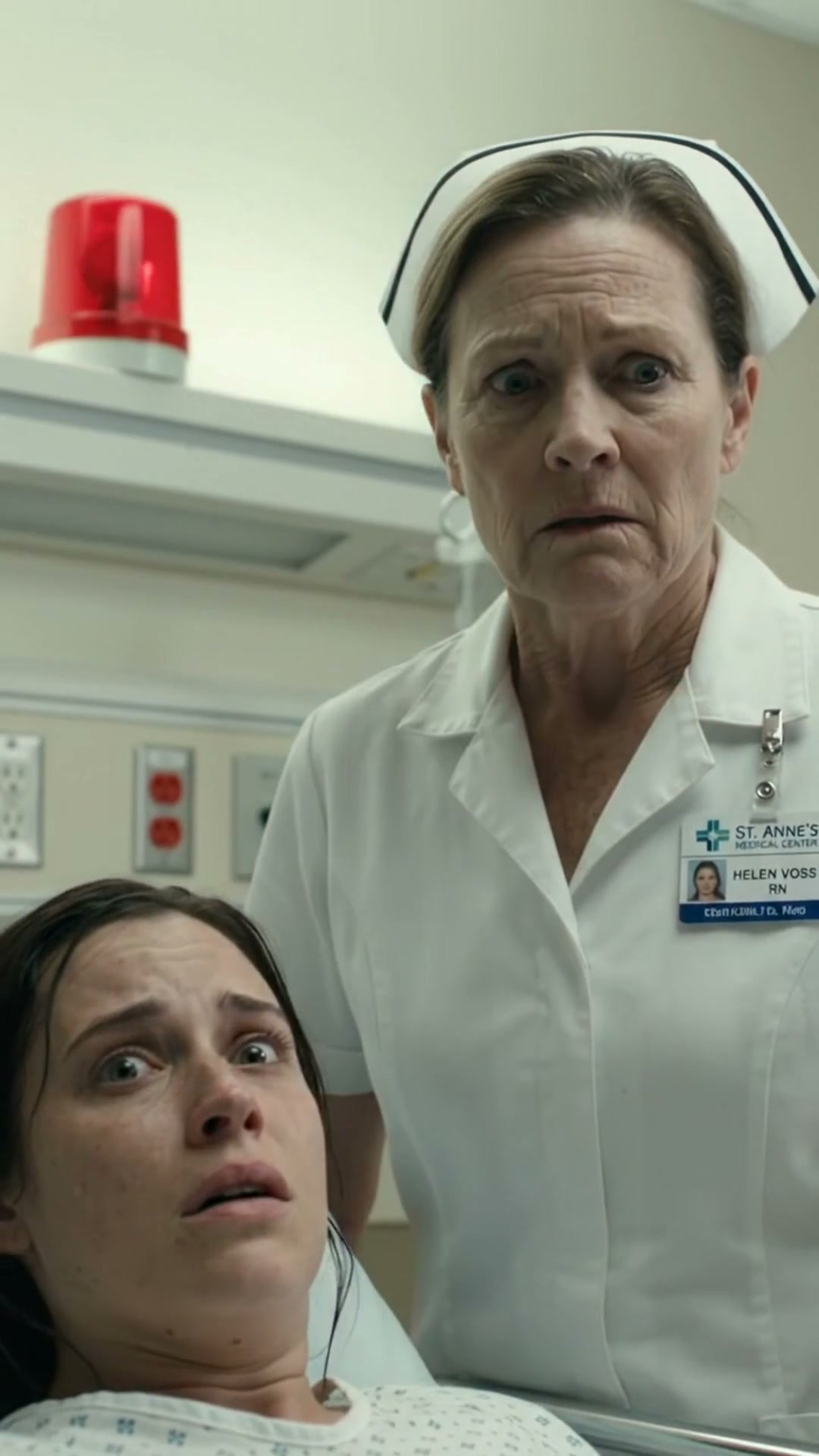
named Ruth Keene took Lily into an examination room while Mara completed the brothers’ information with Celeste.
Ten minutes passed.
Then twenty.
When Mara asked to see her daughter, Celeste told her the infant needed further evaluation.
“I’ll go with her,” Mara said, standing.
Celeste placed a hand on the paperwork.
“Mrs.
Bell, please remain calm.
We need to establish that you have a safe place to take her.”
Mara stared at her.
“I’m finding one.”
“Until then, we have to consider her welfare.”
Mara tried to enter the examination room.
Another employee blocked the door.
By lunchtime, Lily had been moved to an undisclosed location.
Mara never saw her again.
For eleven days, she visited the outreach office, called hospitals, and pleaded with police officers to help her find her baby.
She was told the child was receiving protective care and that the organization was handling the matter.
On November 29, a letter arrived at the temporary room a church had helped Mara obtain.
The letter stated that Lily had died following complications from a respiratory illness.
There was no funeral.
No grave.
No body for Mara to identify.
When she demanded a death certificate, staff told her the child’s records were restricted because of the protective-care case.
Mara went from office to office until she could barely afford bus fare.
She spoke with a lawyer once, but she couldn’t afford the investigation he proposed, and there were few documents available to prove what had happened.
For years, she refused to believe the letter.
Then exhaustion slowly began to imitate acceptance.
She kept Lily’s little knitted hat in a shoebox beneath her bed.
Every June, on the anniversary of her daughter’s birth, Mara wrote her a letter.
She described the weather, the flowers outside her window, and the ordinary things mothers tell their children.
When Lily would have turned five, Mara wrote about the first day of kindergarten.
When she would have turned sixteen, Mara wrote about learning to drive.
When she would have turned twenty-one, Mara apologized for not having been able to protect her.
She never mailed the letters.
There was nowhere to send them.
***
Back in the parking lot in 2026, Thomas waited while Mara stared at the blue quilt.
The children had finished eating.
Micah gently asked them to wait inside the building’s heated entrance, where a caretaker was still working.
Jonah brought Mara a chair.
Thomas laid a document on the table.
Across the top was the name of North Shore Family Outreach.
Below it was a declaration that Mara had voluntarily surrendered her daughter for adoption on November 18, 1996.
The signature at the bottom resembled her name.
But it wasn’t hers.
“I never signed this,” she said.
“We know,” Thomas answered.
Jonah opened his folder.
“Last year, an old storage company began clearing records from an organization that had absorbed North Shore’s archives.
Some files were supposed to be transferred to a historical repository.
A former employee noticed inconsistencies and contacted a legal aid organization.”
Thomas worked as a community legal advocate.
Jonah was a records archivist.
Micah ran an electrical contracting business.
They had grown up together after being placed with a foster family headed by a school bus driver named Walter Sloane and his wife, Edith.
The Sloanes eventually