The first laugh came before Mara Ellison had even reached the witness table.
It was quiet, almost polite, the kind of laugh people used when they wanted cruelty to sound accidental.
Mara heard it anyway.
She heard everything.
At thirty-six, she had spent years training herself to notice details other people discarded: a window left open two inches, a bootprint facing the wrong direction, a bird that suddenly stopped calling from a tree line.
So she noticed the officers whispering in the gallery of the military courtroom at Fort Arden.
She noticed the young captain who looked at her faded black jeans and smirked.
She noticed the major who leaned toward another officer and murmured, “That’s her?”
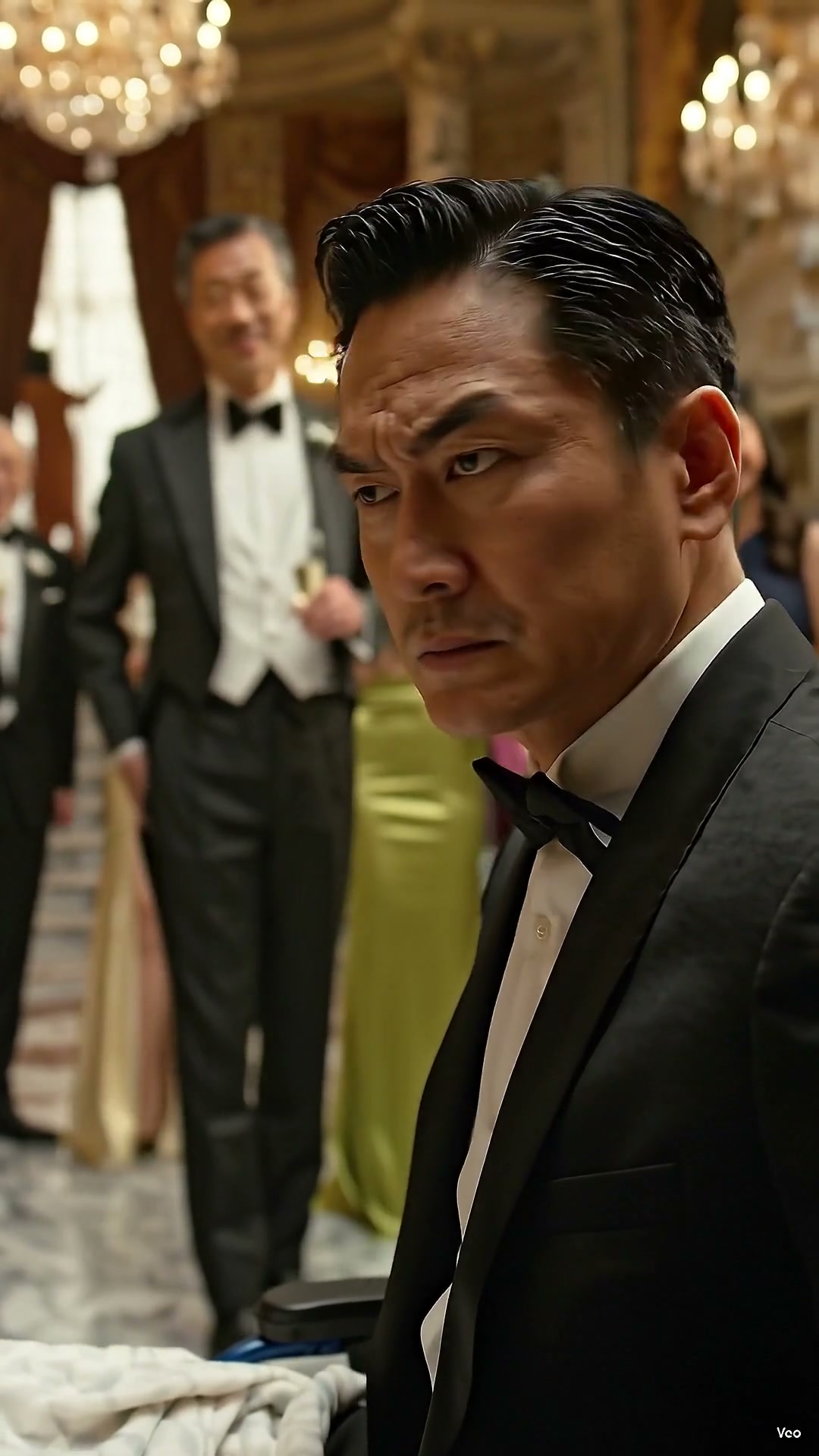
And she noticed Commander Adrian Rourke watching her with the expression of a man who believed the room already belonged to him.
Rourke wore dress blues.
His ribbons formed precise rows across his chest.
His hair was silver at the temples now, which made him look dignified rather than older.
He had spent three years appearing at ceremonies, leadership conferences, and memorial events while Mara fought to prove that five survivors and one dead soldier had been betrayed in a mountain valley thousands of miles away.
The official report said Rourke had done everything possible to save them.
Mara said he had abandoned them.
Only one version could survive the trial.
The bailiff directed her to the witness stand.
Mara sat.
Water from the October rain still darkened the shoulders of her sweater.
The military judge, Colonel Miriam Holt, studied her carefully.
“State your name for the record.”
“Mara Elise Ellison.”
“Occupation?”
Mara paused.
“Security consultant.”
More whispering.
Rourke’s defense attorney, Lieutenant Colonel Peter Shaw, stood slowly.
Shaw was good.
Mara knew that before he asked a single question.
He moved without hurry because he wanted everyone to feel that he had nothing to fear.
“Ms.
Ellison,” he began, “you have testified that you were present during Operation Lantern Ridge three years ago.”
“Yes.”
“You also claim you served with a classified reconnaissance element.”
“Yes.”
“In what capacity?”
“Precision marksman and reconnaissance team leader.”
A sound moved through the gallery.
Someone coughed to hide a laugh.
Shaw glanced toward the judge as though embarrassed on Mara’s behalf.
“Yet the personnel documents available to this court list you primarily as an intelligence support specialist.”
“The public documents do.”
“And we are supposed to accept that a more impressive career is hidden somewhere behind classification?”
Mara met his eyes.
“You don’t have to accept anything.
You have to examine the evidence.”
That irritated him.
Only slightly.
But Mara noticed.
Shaw walked closer.
“You arrived here without a uniform.”
“Yes.”
“No medals.”
“Yes.”
“No insignia.”
“Yes.”
“No visible proof whatsoever that you were the battlefield operator you describe.”
Mara’s gaze shifted to Rourke.
He was smiling.
“There are reasons for that,” she said.
“Convenient reasons?”
“Classified reasons.”
This time the laughter was louder.
Judge Holt struck her gavel.
“Enough.”
The room quieted, although several officers were still smiling.
Mara had expected skepticism.
She had not expected ridicule.
For three years, she had been instructed not to identify her unit publicly.
Her operational designation, missions, and decorations existed in a sealed annex accessible only through restricted channels.
Even the prosecutors had initially received only a partial personnel