his development company, Whitmore Capital Holdings.
The company had declining revenue and significant outstanding obligations, although Preston insisted it was thriving.
He proposed a lease with an option to buy, saying he needed time to arrange a legitimate purchase.
I had concerns.
But I was still trying to preserve our marriage.
With advice from Rebecca, the trust’s property company entered into a temporary lease and purchase-option agreement.
The documents stated clearly that ownership would not transfer until the agreed purchase price was paid and the transaction closed.
The option had never been exercised.
Preston had no authority to mortgage or otherwise encumber the property.
He did, however, obtain permission for certain improvements, subject to written approval.
Then he began ordering costly renovations without authorization.
Imported fixtures.
Custom stonework.
New landscaping.
A guesthouse redesign.
And somewhere along the way, someone apparently decided that an invented trustee authorization would solve the financing problem.
‘Rebecca,’ I asked, ‘how much work has already been completed?’
‘About six hundred thousand dollars has been invoiced.
Preston signed personal payment guarantees with the contractors.’
I closed my eyes.
He hadn’t merely been boasting about a house that wasn’t his.
He had made commitments he couldn’t afford, apparently expecting my family assets to rescue him.
‘Preserve everything,’ I said.
‘And notify the lender in writing that the authorization is disputed.
I want every step properly documented.’
‘Already underway,’ Rebecca replied.
‘We should also arrange independent forensic review and report the suspected forgery through the appropriate channels.’
I agreed.
Nothing about this would be handled with threats or private revenge.
I wanted the facts established by evidence.
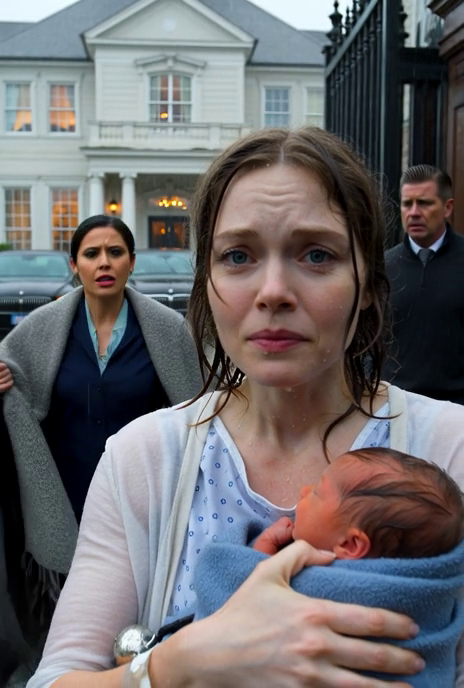
That night I took my daughters to my parents’ house.
My father, Thomas, opened the front door wearing the same old sweater he had worn for twenty winters.
He looked at Sophie’s stained cardigan and asked no questions until the girls were safely inside.
My mother made hot chocolate and brought out a board game.
After the children went to sleep, I told my parents everything.
My father listened without interrupting.
When I finished, he said quietly, ‘Margaret would have been furious about the forged signature.
But she’d have been even angrier about those little girls.’
I knew he was right.
My grandmother had never cared whether a child was a boy or a girl.
She used to tell me that character was the only inheritance nobody could take away.
My phone began vibrating again.
Preston.
I let it ring.
A message followed.
‘Bring the girls home.
Mother expects an apology.’
Another arrived ten minutes later.
‘You’re embarrassing me in front of important people.’
Then a third.
‘If you destroy this marriage, don’t expect to take anything with you.’
I saved the messages and sent copies to my family-law attorney, whom Rebecca had recommended.
The next morning, I reviewed our household finances.
What I found confirmed that Preston had been hiding much more than an unsuccessful property transaction.
His luxury SUV was leased.
His watches had been purchased on credit.
His business owed money to multiple contractors.
He had also opened a commercial credit line secured by assets belonging to his company, then used a portion of the proceeds to pay for family celebrations.
The lavish lifestyle Eleanor advertised was supported by increasingly fragile debt.
I didn’t need to speculate about every