The groom took the microphone before the officiant could begin.
“There will be no wedding today,” Preston Hale announced.
“I would rather die single than marry a gardener’s daughter.”
The words traveled through the community hall and seemed to erase every sound behind them.
One hundred and twenty guests stared toward the altar.
Elena Marquez stood beneath an arch of white roses and eucalyptus, still holding the small bouquet her father had assembled himself before sunrise.
Her first thought was that Preston had made some cruel joke whose punch line she could not yet understand.
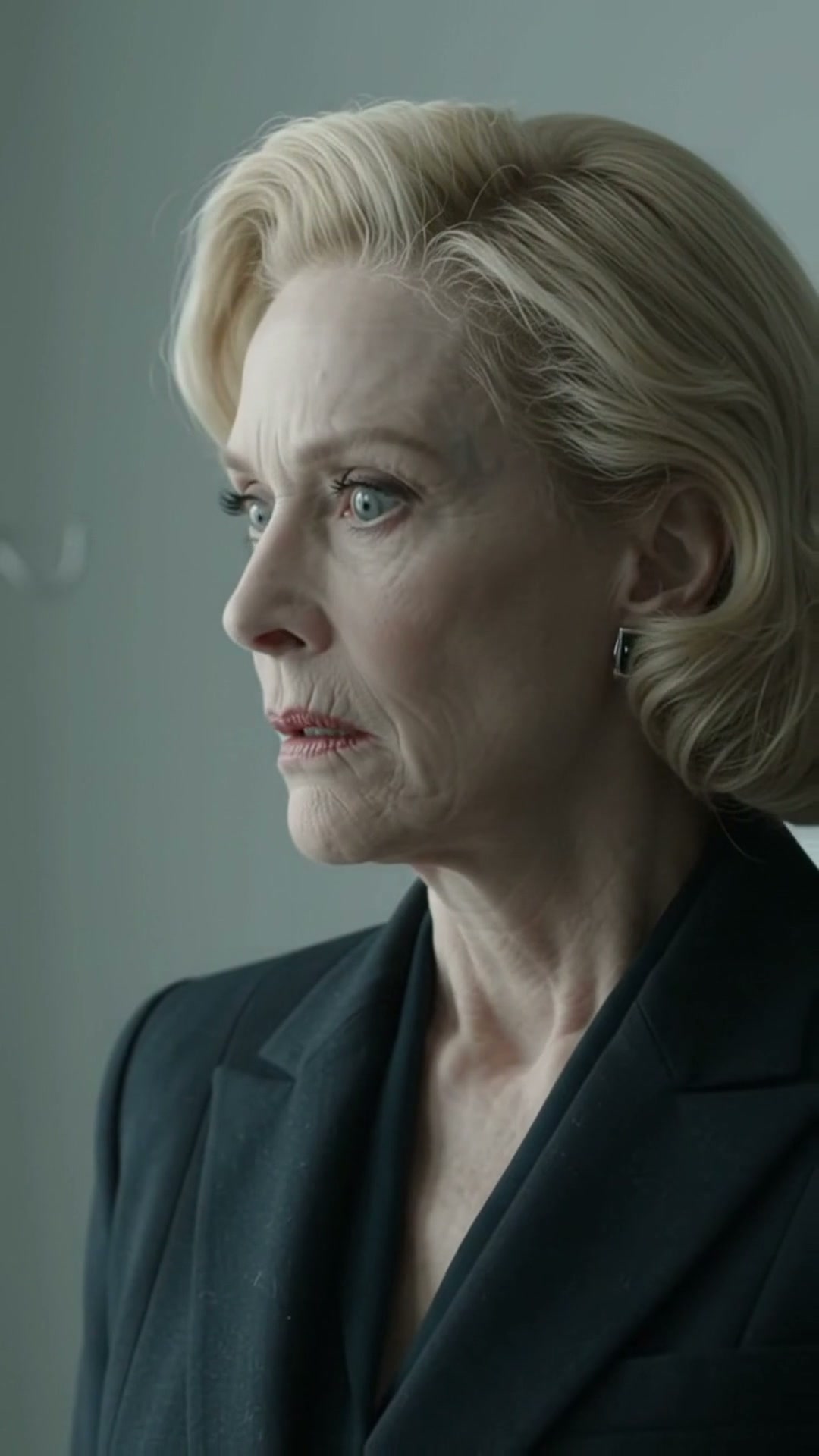
Then she saw his mother smiling.
Judith Hale sat in the front row wearing a silver designer dress that had probably cost more than Elena’s father earned in two months.
Beside her, Preston’s father, Leonard, stared at the floor.
Preston loosened his tie.
“I tried,” he continued.
“I really did.
But my family has a reputation.
Our name opens doors.
I can’t spend the rest of my life introducing a man who cuts grass for a living as my father-in-law.”
A few uncomfortable murmurs came from the back of the room.
Elena did not look at Preston.
She looked at her father.
Tomás Marquez stood three steps away in a charcoal suit that hung loosely around his shoulders.
The suit was new.
Elena knew because she had helped him choose it from a discount menswear shop six weeks earlier.
He had protested the price.
“Nobody will be looking at me,” he had told her.
“I will,” Elena had replied.
Tomás had smiled then.
He was not smiling now.
For nearly thirty years, people around Mesa, Arizona, had known him as Tomás the gardener.
He maintained yards, apartment courtyards, church gardens, and small commercial properties.
He repaired irrigation lines, planted citrus trees, trimmed bougainvillea, and could revive almost any dying rosebush placed in front of him.
He left home before dawn in a faded pickup carrying hand tools sharpened so carefully that Elena joked they received better treatment than the truck.
When Elena’s mother died from an aneurysm when Elena was nine, Tomás raised their daughter alone.
He learned to pack school lunches.
He learned to braid hair badly.
He attended parent conferences in dusty work boots and sat in the back because he was embarrassed about smelling like fertilizer.
He never missed Elena’s birthday.
He never let her see a bill he could not pay.
And he never once complained about the ache that increasingly made him limp after long workdays.
Two years before the wedding, Elena discovered an old flour tin hidden behind spare blankets in his closet.
Inside were envelopes filled with cash.
Some contained twenty-dollar bills.
Others held fifties.
One had only seven dollars and a note in her father’s handwriting: Extra from Thursday route.
Tomás had been saving for more than a decade.
“For what?” Elena had asked.
He looked embarrassed.
“For the day you get married.”
She cried harder than he did.
Now the reception tables surrounding them were covered with linens borrowed from Elena’s aunt.
Neighbors had strung lights across the ceiling.
Friends had cooked food.
Tomás had grown many of the flowers himself.
Preston had known all of that.
He had allowed Tomás to spend the money anyway.
Judith stood.
“People need to remember where they belong,” she