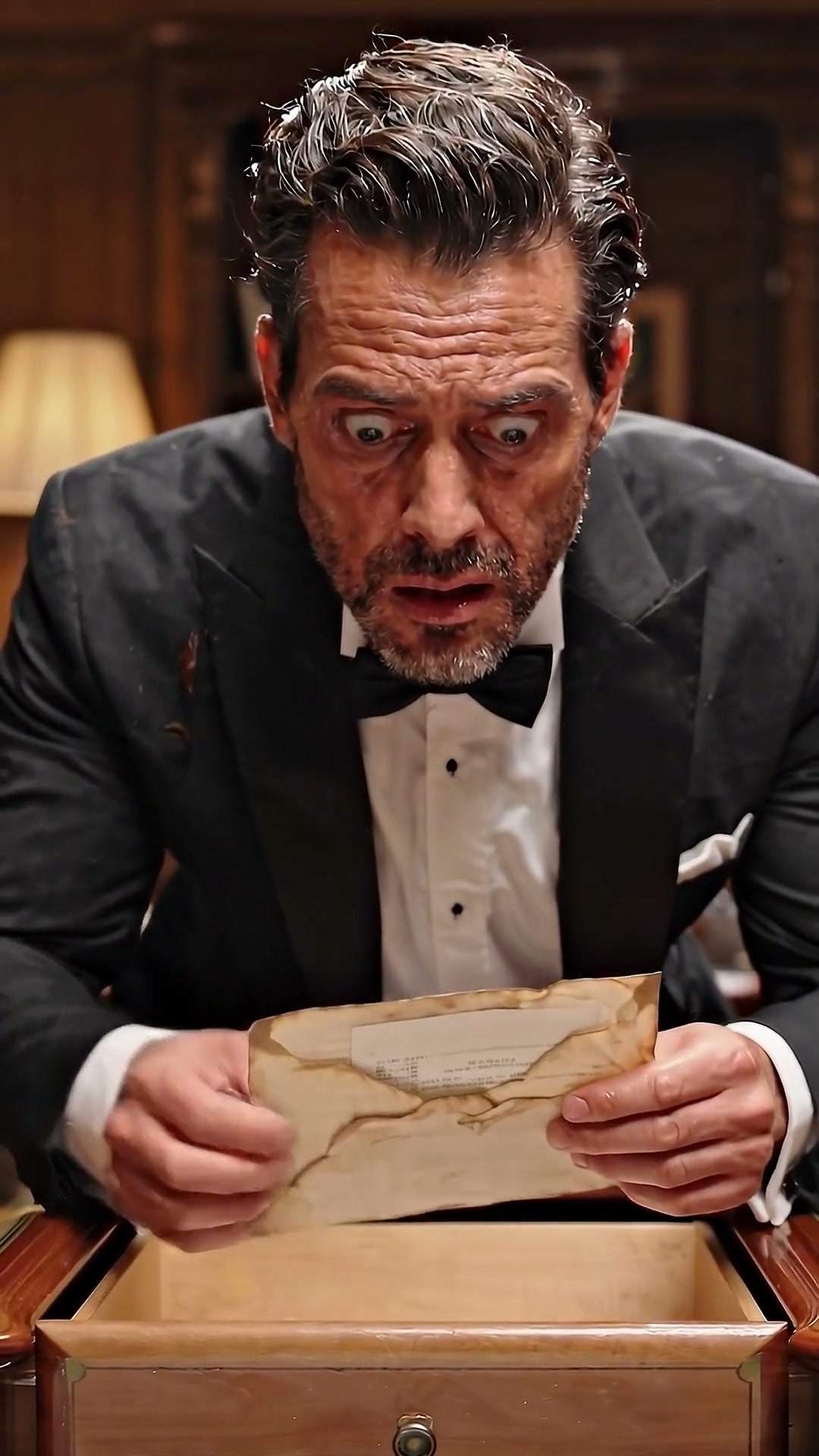
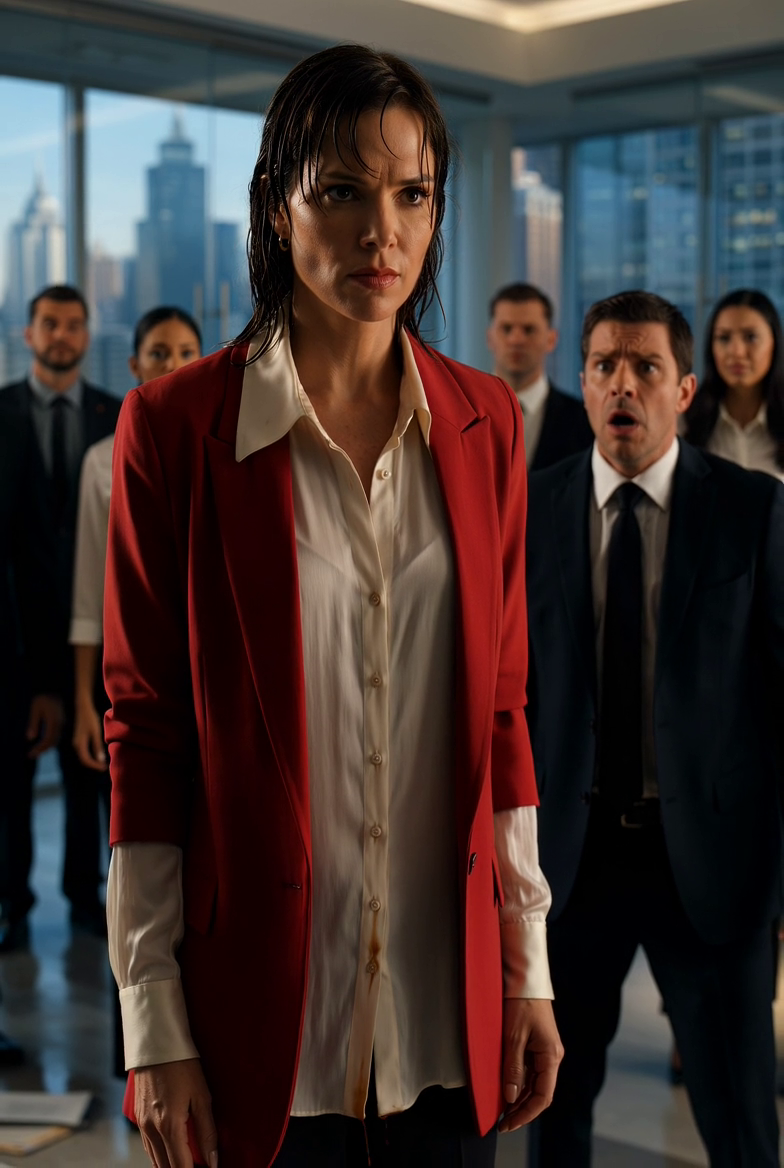
My mother-in-law placed a black leather folio beside my wineglass and said, “Consider this our way of giving you a graceful exit.”
For a second, I thought I had misunderstood her.
The dining room of Conrad and Lila Voss’s Connecticut estate was so carefully controlled that even surprise seemed out of place there.
Candlelight reflected against crystal.
A pianist played softly through hidden speakers.
The table had been set for six even though only five of us were dining, because Lila believed symmetry mattered.
My husband, Evan, sat beside me.
He said nothing.
That silence told me the folio wasn’t a spontaneous idea.
Conrad Voss rested both forearms on the table.
At sixty-two, he had the calm, practiced expression of a man accustomed to hearing bad news from people who still called him sir.
His company, Voss Transit Systems, built braking assemblies, cargo-transfer equipment, and specialized rail components used across the country.
For the first hour of dinner, he had barely mentioned business.
Instead, he and Lila had examined me.
Lila asked whether I intended to remain in Baltimore permanently.
I explained that my work in maritime emergency planning involved coordinating port operators, local agencies, and transportation companies during major disruptions.
“Government-adjacent work?” she asked.
“Sometimes.”
“That can’t be especially lucrative.”
Evan took a drink of wine.
I noticed.
Conrad asked about my father.
“Evan said he repaired industrial machinery.”
“He did a lot of things,” I replied.
“Retired now?”
“Mostly.”
My father, Thomas Calder, lived in a modest farmhouse outside Annapolis.
He wore twenty-year-old jackets, drove a pickup with one mismatched door, and spent more time repairing neighbors’ boat motors than talking about his past.
People made assumptions about him quickly.
He encouraged that.
“A man’s favorite advantage,” he once told me, “is letting impatient people decide what he is before he has to tell them.”
I had inherited the habit.
Evan knew my father as Tom, a quiet widower who had spent decades around machine shops.
He had never asked many questions beyond that.
Neither had I volunteered answers.
When Evan and I met three years earlier at a transportation conference in Norfolk, he had been an attorney negotiating a complicated supplier dispute.
I was helping coordinate an emergency exercise at the port.
We ended up trapped under the same hotel awning during a sudden storm after the closing session.
He made me laugh within five minutes.
He asked for my number within ten.
For nearly two years, I believed I had found someone who cared less about status than the world he came from.
Evan rarely mentioned his family’s wealth early in our relationship.
I didn’t learn the scale of Voss Transit until months after we started dating.
When I finally searched the company, I found photographs of his father shaking hands with governors, standing beside transportation secretaries, and ringing exchange bells after major acquisitions.
Evan seemed embarrassed by it.
“It’s my father’s identity,” he told me.
“Not mine.”
I believed him.
We married quietly in Annapolis.
Dad wore the same navy blazer he had owned since I was in college.
After the ceremony, he pulled Evan aside.
“She doesn’t need anybody to rescue her,” Dad told him.
“Just don’t become the person she needs rescuing from.”
Evan laughed when he repeated it to me later.
I