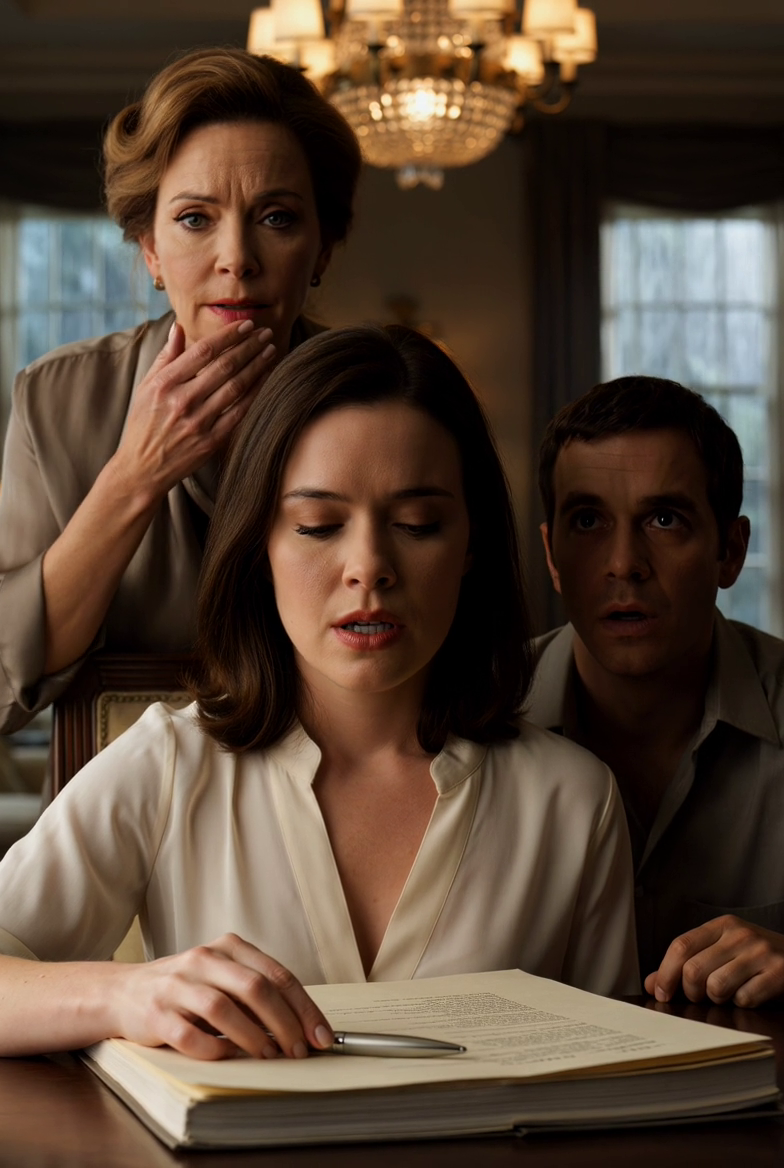
The first message arrived while the minister was blessing my husband’s coffin.
“Ruth, that coffin is empty.
I’m alive.
Whatever Nolan tells you, do not sign the East Pier papers.”
I read it three times.
Then I looked at the mahogany coffin resting beneath the chapel windows.
My husband, Henry Ashford, was supposed to be inside it.
For six days, I had believed he was dead.
For six days, I had slept with his old wool sweater against my chest because it still smelled faintly of the cedar soap he used every morning.
And now someone was telling me that the funeral was a lie.
My name is Ruth Ashford.
I was sixty-three years old that September, and Henry and I had been married for forty-three years.
We lived outside Rockland, Maine, where the sea could be beautiful one moment and merciless the next.
Henry owned Ashford Boatworks, a repair yard serving local fishermen and commercial crews.
He had inherited a small workshop from his father and expanded it into a business employing thirty-seven people.
I had helped build it from the beginning.
I kept the books when we couldn’t afford an accountant.
I painted the first office myself.
During our second winter, when a storm destroyed half the dock, I sold my grandmother’s diamond bracelet to cover the wages of six mechanics.
Henry never forgot that.
He used to say the company might carry his surname, but its foundations belonged to both of us.
We raised two sons in the house overlooking the inlet.
Nolan, forty-one, was ambitious, polished, and brilliant with numbers.
Elliot, thirty-six, was quieter.
He understood engines better than people and spent most of his childhood following Henry around the workshop.
I loved them both.
Whatever mistakes they made as adults, they were still the little boys who once waited at the kitchen window for their father to come home.
That was why the message frightened me more than I could explain.
“Don’t trust Nolan,” it said.
I raised my head.
Nolan stood beside me in an immaculate black suit.
He had arranged the memorial, contacted relatives, selected the coffin, and handled every conversation with the authorities.
He noticed my expression.
“Mom? Are you all right?”
“Just dizzy.”
His fingers settled firmly around my elbow.
“We’ll take care of everything now.
You don’t need to worry about the company or the house.”
His younger brother stood on my other side, looking at the carpet.
Elliot hadn’t cried once during the service.
Neither had Nolan.
At the time, I told myself that people expressed grief differently.
But suddenly their dry eyes felt like part of a larger secret.
Six days earlier, on a Tuesday morning, Henry had gone out in his skiff to inspect a damaged mooring near East Pier.
According to Nolan, a mechanical failure had caused the boat to strike rocks.
The skiff was recovered, damaged and empty.
Henry’s jacket had been found in the water.
Nolan told me the search had ended and the authorities had confirmed his father was gone.
I asked to see Henry one last time.
“You don’t want to remember Dad that way,” Nolan replied.
“Trust me.”
I had trusted him.
I had allowed my sons to handle every arrangement while I sat in our bedroom, surrounded by forty-three years