before opening his eyes.
I always took it.
We also had hard conversations about the things we’d hidden from each other.
Henry admitted that he should have told me about the financial concerns as soon as he discovered them.
He had been trying to protect me from the pain of learning what our sons had done.
I told him that protecting someone should never mean denying them the truth.
He agreed.
In the spring, we completed a restructuring of Ashford Boatworks, placing meaningful ownership interests into an employee trust while preserving the operating capital needed to keep the yard healthy.
The workers elected representatives to oversee their interests.
An independent financial manager was hired, and new controls meant no single family member could move company funds without proper review.
The business survived.
So did East Pier.
When the first fishing boats returned after the winter storms, Henry insisted on going down to watch them come in.
I walked beside him, keeping my pace slow enough for his injured leg.
At the workshop entrance, the employees had hung the old brass tide clock we’d kept in our kitchen for forty-three years.
The wood had been polished.
The cracked face had been carefully restored.
A small brass plate beneath it carried Henry’s father’s name and the year the business began.
Henry stared at it for a moment.
“Still runs five minutes slow,” he said.
“I asked them to leave it that way.”
He smiled.
We stood together as the morning shift arrived, workers carrying lunchboxes and travel mugs, calling greetings across the dock.
No one treated me like a helpless widow anymore.
I attended the board meetings.
I reviewed the accounts.
I signed the documents that deserved my signature and refused those that didn’t.
Our sons’ betrayal had changed our family forever.
There was no pretending otherwise, and there were consequences neither love nor regret could undo.
But we had not lost everything.
One evening, Henry and I sat on the porch watching the harbor lights come on.
“Do you ever think about the funeral?” he asked.
“Sometimes.”
“What do you remember most?”
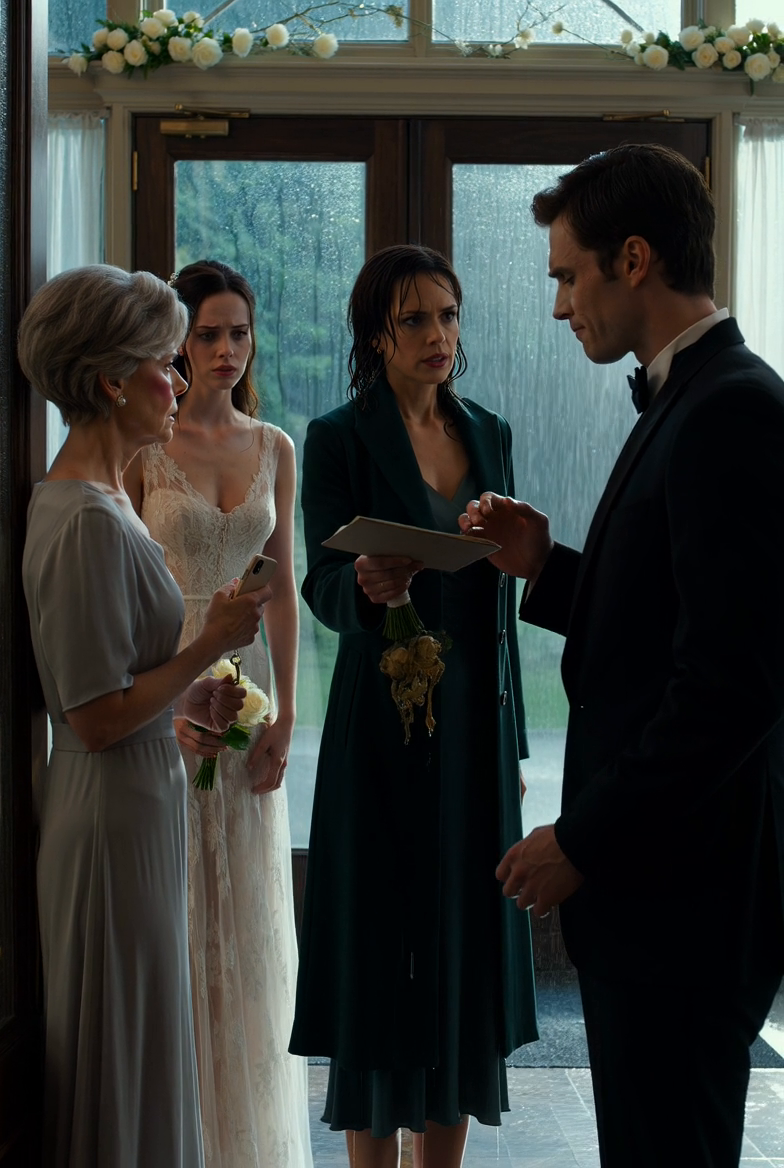
I thought about the coffin, the black suits, the whispered condolences, and the terrible message that had arrived during the minister’s prayer.
Then I looked at my husband sitting beside me, alive in the fading light.
“I remember everyone telling me you were gone,” I said.
“And I remember finding out I didn’t have to believe them.”
Henry reached for my hand.
The tide was coming in.
The workshop clock struck five minutes late, just as it always had.
And this time, when Henry stood to go inside, I stood with him.