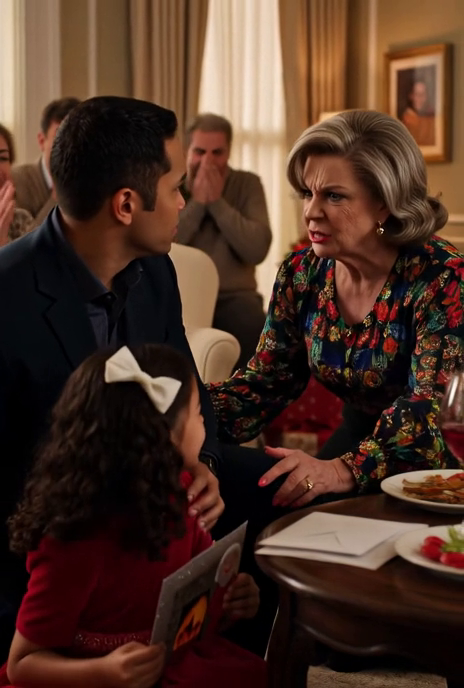
The sentence came at 7:42 on a Thursday morning, thirteen minutes after Elena Ramirez walked through the front door from the longest hospital shift of her month.
“If you’re going to live here without paying rent, pack your things and leave.”
Her mother, Rosa, said it without shouting.
That somehow made it worse.
Elena stood in the tiny kitchen of the Boyle Heights house where she had grown up, still wearing navy-blue scrubs, compression socks, and a hospital badge she had forgotten to remove.
Her dark hair was twisted into a loose knot.
There was a faint indentation across the bridge of her nose from protective glasses.
She had spent twelve hours moving between frightened families, alarms, medication checks, a confused elderly patient who kept calling her by his daughter’s name, and an emergency transfer that had kept the entire unit moving until sunrise.
All Elena wanted was a shower and four hours of sleep.
Instead, her nephews were fighting over a game controller in the living room.
A cup of hibiscus water had spilled beside the sofa.
One backpack lay open on the floor, papers scattered underneath it.
Her older sister, Maribel, sat at the plastic kitchen table scrolling through her phone.
“Mom’s right,” she said.
“Honestly, she should’ve started charging you years ago.”
Elena stared at her.
Maribel finally glanced up.
“What? You watch Mateo and Lucas sometimes.
That’s not rent.”
Sometimes.
The word echoed through Elena’s exhausted mind.
For five years, sometimes had meant waking the boys for school after working all night.
Sometimes meant packing lunches because Maribel had an early meeting.
Sometimes meant picking them up because Maribel wanted drinks with coworkers.
Sometimes meant pediatric appointments, parent-teacher conferences, forgotten science projects, soccer practices, fevers, grocery runs, dishes, laundry, and bedtime.
It had meant buying Mateo new sneakers when his father said money was tight.
It had meant paying Rosa’s prescription copays.
It had meant covering the internet, part of the electric bill, half the groceries, and nearly every emergency expense that appeared unexpectedly.
Elena had never called any of that rent.
She had called it family.
Apparently, she had been the only one using that definition.
Rosa crossed her arms.
“You’re twenty-nine years old.
Your sister has two children.
I shouldn’t have to remind you who has more responsibilities.”
Elena looked toward the living room.
Mateo, eight, had stopped arguing with his younger brother.
He was listening.
That decided it.
Elena refused to have the conversation in front of them.
“Okay,” she said.
Rosa blinked.
Maribel laughed once.
“Okay what?”
“I’ll leave.”
For the first time, both women looked directly at her.
Rosa frowned.
“Don’t start acting dramatic.”
Elena didn’t answer.
She walked down the hallway to the bedroom she had occupied since she was sixteen.
Under the bed was a medium-size suitcase.
She had bought it eight months earlier.
Not because she had planned some grand escape, but because she had begun quietly admitting something to herself: she could not keep living like this forever.
She had saved part of every paycheck since then.
Whenever Maribel asked for money, Elena gave less than she once would have.
Whenever Rosa suggested another household purchase, Elena waited a day before agreeing.
Slowly, painfully, she had built an emergency fund.
Now the emergency had a name.
It