to learn how to be family without me being the solution to every problem.”
Rosa began crying.
Once, that sound would have dissolved Elena’s resolve immediately.
This time, she listened without changing her answer.
The real confrontation came three weeks later at Aunt Celia’s birthday dinner.
Elena almost didn’t attend.
Then Mateo called her himself.
“Are you still my aunt?” he asked.
Her heart broke.
“Always.”
“Then can you come?”
So Elena went.
She brought Celia flowers and the boys two comic books.
For the first hour, everything remained polite.
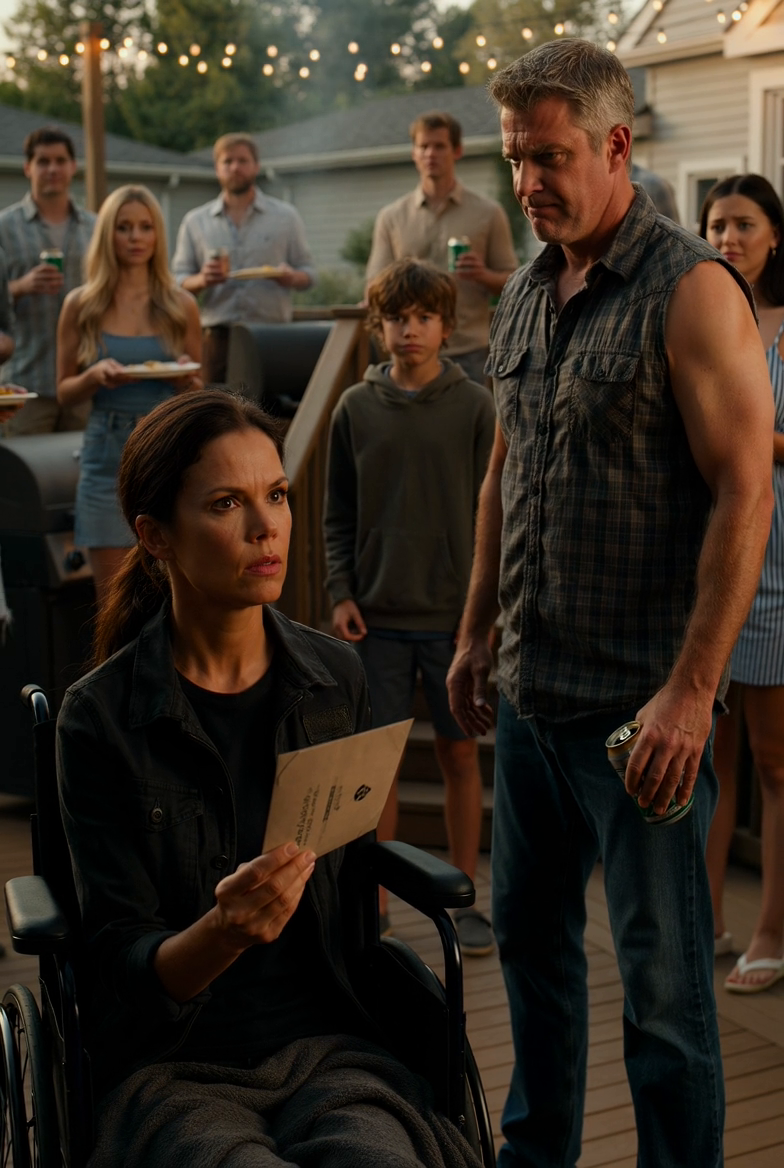
Then Rosa cornered her near the dining room.
“People are asking questions,” she whispered.
“About what?”
“About why you left.”
“Tell them the truth.”
Rosa’s mouth tightened.
“The truth makes it sound like we used you.”
Elena stared at her mother.
“What would you call it?”
Rosa flinched.
Across the room, Maribel had heard them.
She slowly stood.
Three weeks earlier, Elena would have expected her sister to defend Rosa.
Instead, Maribel said, “Mom, stop.”
Rosa turned.
“Excuse me?”
Maribel walked toward them.
“She’s right.”
The room quieted.
Maribel swallowed.
“I didn’t understand until she left.
I thought Elena had it easy because she didn’t have kids.
I thought her time was just…
available.”
Elena said nothing.
Maribel continued.
“The first week without her, I nearly lost my mind.
But you know what the worst part was? Every time something went wrong, I reached for my phone to call Elena.
Not because she was the only person who could fix it.
Because I’d trained myself to believe I shouldn’t have to.”
Rosa looked wounded.
“I helped you raise those boys.”
“You did.
And so did Elena.
But Elena never chose to become their third parent.”
Mateo and Lucas were in the backyard and could not hear them.
Elena was grateful for that.
Aunt Celia quietly closed the kitchen door.
Rosa sank into a chair.
“So I’m the villain now?”
Elena pulled out the chair opposite her.
“No.
I don’t need a villain.
I need things to change.”
She placed a sheet of paper on the table.
It wasn’t a bill.
It was a list of boundaries.
Elena would visit because she wanted to, not because she was expected to clean or babysit.
She would happily spend time with her nephews when arrangements were made in advance.
She would no longer pay household bills at a home where she didn’t live.
Emergency help would be her decision, not an obligation.
And no one would use her father’s money as a family resource.
Rosa read the page twice.
“This feels cold.”
“It feels clear.”
“Family shouldn’t need rules.”
Elena thought of the five years she had lived without any.
“Maybe ours does.”
Maribel unexpectedly laughed.
A small, tired laugh.
“Ours definitely does.”
Even Rosa smiled for half a second.
Change did not happen instantly.
Rosa called twice the following week asking Elena to pay the electric bill before remembering she was no longer responsible for it.
Maribel occasionally sent last-minute messages asking for childcare.
Elena sometimes said yes.
More importantly, she sometimes said no.
The world did not end.
Maribel found an after-school program through the boys’ school and rearranged two days of her work schedule.
Their father, who had spent years claiming his hours were inflexible, suddenly discovered flexibility when Maribel