furniture into their rooms.
My mother wanted to attend.
I drove her there on a bright Saturday morning in early autumn.
She wore a blue cardigan and carried a tray of cinnamon rolls from the bakery beneath her apartment.
Owen met us near the entrance.
He had grown a short beard and looked healthier than he had during the months following the investigation.
“I’ve fixed the pantry shelves,” he told her.
“And the kitchen has a real inventory system now.”
My mother laughed.
“Then somebody had better teach me how to use it.”
He kissed her cheek.
For a moment, watching them together, I thought about how close Martin had come to destroying the relationship between his wife and his own son.
Inside, the renovated dining room smelled of fresh coffee and bread.
The old framed photograph of Martin had been removed.
In its place hung a simple bulletin board listing volunteer hours, residents’ resources, and contact information for anyone who had questions about how the program operated.
Near the doorway sat a new sign-in book.
My mother opened it and studied the first page.
Each resident’s entry corresponded to a person who had actually arrived.
It was such a small thing.
Such an obvious thing.
Yet I watched her run one finger carefully down the names, her eyes shining with relief.
“This is how it should have been,” she said.
Later, we stood outside beneath the same awning where she had sat after Martin’s arrest.
A delivery truck rolled away from the loading entrance.
Somewhere inside, someone laughed.
My mother took my hand.
“Do you remember what he used to say?” she asked.
“He said a lot of things.”
“That nobody would ever believe us over him.”
I looked toward the doorway, where Owen was holding it open for a man carrying a box of books.
“I remember.”
She smiled faintly.
“I spent so many years thinking I needed someone important to tell me I was allowed to leave.”
I squeezed her hand.
“What changed?”
She considered the question.
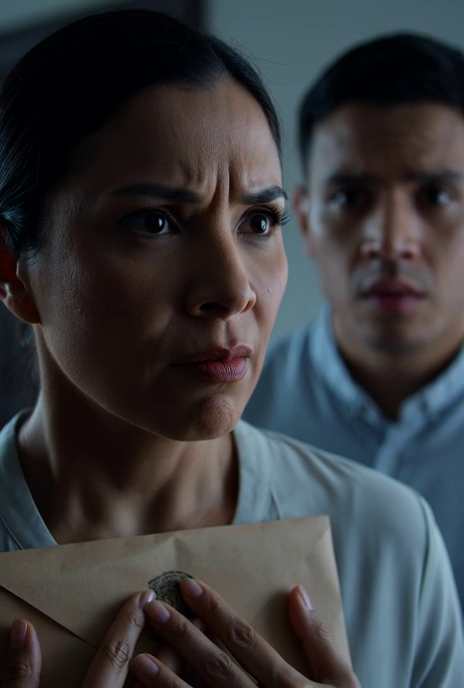
Then she took the small brass key from her purse.
It was the same key she had carried beneath her cardigan on the day Martin threatened us.
She had kept it after the investigators returned her personal belongings.
It no longer opened anything she needed.
She turned it once between her fingers, then placed it in my palm.
“I finally understood,” she said, “that I didn’t need his permission.”
We went inside together.
And for the first time in twenty-three years, my mother walked through a doorway without looking over her shoulder.