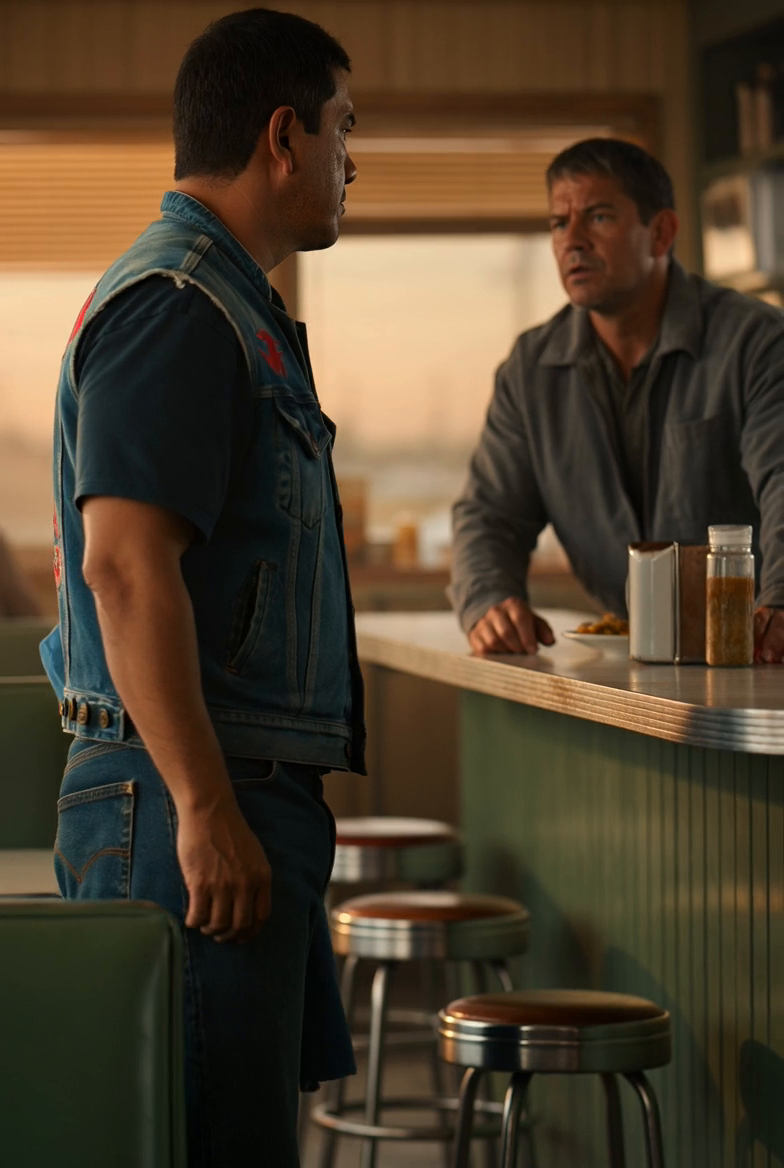
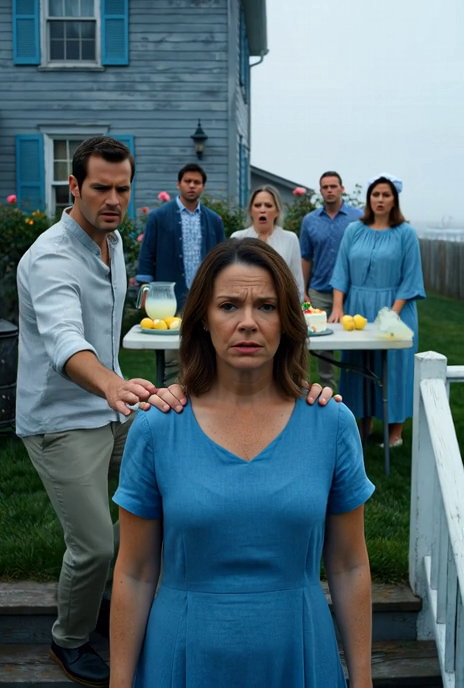
Mom isn’t going to sign your statement.
And those officers aren’t leaving.”
His gaze moved between us.
“You all think you can destroy me.”
“You made the choices that brought them here.”
For the first time in my life, I heard my mother say what she actually felt.
“I’m afraid of you,” she told him.
“I have been afraid of you for years.
But I’m more afraid of what happens if I keep helping you hide things.”
His shoulders shifted.
“Rosa—”
“No.
You don’t get to speak for me anymore.”
I watched his expression change from anger to disbelief.
He was accustomed to my defiance.
He had never learned how to handle hers.
Outside, the officers issued another command.
Martin looked at the pistol in his hand as though noticing its weight for the first time.
Then he lowered it.
“Put it on the floor,” I said.
He hesitated.
“Please,” my mother added.
“Don’t make this worse.”
At last he placed the weapon on the tile and stepped away.
I told the officers through the closed door that the gun was on the floor and that the three of us were moving away from it.
Following their instructions, we left separately with our hands visible.
Uniformed troopers took control of the scene and secured Martin.
No one cheered.
No one gave a speech.
My mother simply sank onto a low concrete step beneath the awning and covered her face with both hands.
I sat beside her until she was ready to stand.
The rain had become light and steady.
Agent Keene approached after officers confirmed that the immediate danger had ended.
“Mrs.
Kessler,” she said, “are you willing to tell us about the records you mentioned?”
My mother looked at the yellow envelope in her lap.
“Yes.”
Then she reached into her pocket and handed Keene the brass key.
“There’s a safe in the upstairs office.
I can tell you exactly where it is.”
The investigators did not simply accept the key and start opening random drawers.
They confirmed that the office and safe fell within the authorized search, documented the key, and conducted the search under their procedures.
I watched from the hallway as they brought sealed evidence containers downstairs.
My mother and I were kept away from the examination of the contents.
Later, investigators explained what they had recovered.
The safe contained original loan agreements, financial correspondence, copies of reimbursement submissions, and a handwritten notebook Martin had used to track transfers between Willow House and companies he controlled.
It also contained papers apparently designed to assign responsibility for the disputed transactions to Owen.
Some of those documents bore his name beside signatures that investigators would eventually conclude were not authentic.
But the most revealing item was a set of correspondence Martin had retained from the nonprofit’s bookkeeper.
Months earlier, the bookkeeper had raised questions about claims for days when utility records suggested much of the facility was closed.
Martin had responded by insisting that the occupancy figures were accurate and instructing the office to submit them anyway.
The correspondence directly contradicted his later claim that Owen had independently prepared all the false reports.
It showed that Martin knew of the discrepancies and had intervened personally.
Other evidence came from sources he could not control.
Bank records traced payments